

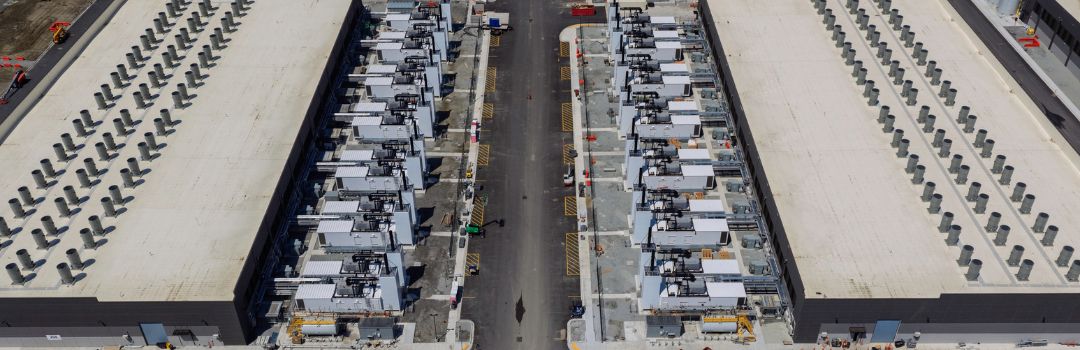
Tech companies, flush with investor money, are instigating a massive data center buildout in the US to host artificial intelligence (AI)—at least 2000 new data centers are in the pipeline, which would triple the current number. The buildout comes with significant environmental impacts, and communities are already seeing unprecedented energy and water demand along with air and noise pollution. These same communities are often already burdened by other industrial development.
Many of our members are fighting this buildout. At our last spring meeting in Detroit, Rachel’s Network heard from Catalyst Recipient Michelle Martinez about the impacts she’s seeing in Michigan and how communities can respond.
What’s something that you wish more people understood about the data center buildout?
Communities all over the US are concerned about the impact of data centers. Although they are not new, the speed, size, and scope are being accelerated through the investment of AI and the surveillance economy.
The principle opposition environmental justice communities have is the lack of transparency, regulation, and accountability. Data center investors and developers are rolling through checkpoints on water consumption, energy usage and pollution, all while avoiding taxes.
Data centers are expected to contribute an additional 12-14% to greenhouse gas emissions in just a few years. Activists are ringing alarm bells as investors contribute massive amounts of money to elections to facilitate a more lucrative business environment. EJ communities are also concerned about what data centers are being used for—surveillance, forever wars, ICE, and mass incarceration are the double jeopardy of this buildout left unchecked.
What’s the big data center battle happening in your region right now?
The largest battle and most illustrative of the problem is the 250-acre Open AI, Related Digital development in Saline Michigan. It has been met with massive opposition from Washtenaw County residents who are also dealing with other proposals in nearby Ypsilanti and Van Buren Township. After developers sued the small township for voting against the development, Saline settled, allowing the project to go forward. Saline electeds also voted to exempt the data center from 50% of its property tax bill and Sierra Club found that it would forego $443 million in state use and sales tax.
How has your organization responded to this threat?
The Tishman Center for Social Justice and the Environment at the University of Michigan is investigating how these new data center developments will shift the burden to low-income and vulnerable communities. We found that in Washtenaw County, female-led heads of households will be most impacted by the siting of data centers. And low-income rate payers, principally concentrated in Detroit, will feel the impact of rate hikes on their energy bills—threatening Detroit neighborhood stability and potentially household health and well-being.
Where have you seen progress (either in your region or elsewhere) and what lessons can we draw from those wins?
Communities all over the US are coming together to demand moratoriums on data centers and even outright bans. If they can’t follow the rules, if billionaires can’t pay taxes and their fair share of the burden, why should we allow them to threaten our homes and communities while we fight climate change? Instead, innovations in tax structures, regulations, and consumer protections are being explored to build the just transition we need to fight for.
To learn more about the data center buildout, visit sierraclub.org/issues/climate/data-centers. Photo: iStockphoto; marchello74

Michelle Martinez (2020 Catalyst Recipient) is the inaugural director of the Tishman Center for Social Justice and the Environment at the University of Michigan. She has 15 years of experience practicing environmental justice in her hometown of Detroit.