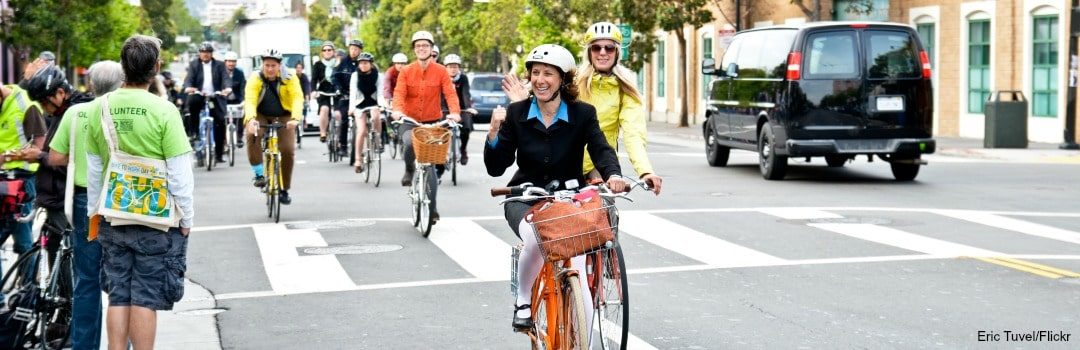
Member Abigail Rome believes Car Free Day can do even more for those of us ready to aspire to loftier goals. Taking a car-free pledge offers an opportunity to consider not only how and when we use our automobiles, but also how we can reduce greenhouse gas emissions and curb climate change on a much larger scale.
More women financial advisors than men report being interested in sustainable investing. According to a key 2012 study, Gateways to Impact spearheaded by the Rockefeller Foundation, Deutsche Bank Asset Management and other investment enterprises, 59 percent of women advisors surveyed expressed strong interest in advising their clients on sustainable investment strategies, compared to 34 percent of their male peers. If this trend continues, women will be key to moving sustainable investment from the margins to the mainstream.
In 1987 the UN designated July 11th World Population Day to build awareness of the impact population has on development and the environment. As of this writing, the world population is estimated to be 7.239 billion. Roughly 40% is under the age of 25. The UN estimates we will grow to 9.5 billion by 2050. We are at a critical moment in history. If population growth continues as projected, living conditions will become bleaker; and water, food and land will become scarcer.
My generation of middle-class United States citizens got the message that individual achievement was the measure of success. And we also learned to be rugged individualists—never let ’em see you sweat, big girls and boys don’t cry, no thanks, no help needed, no help wanted. While there are still some holdouts who believe success and well-being are a personal matter, that delusion has been shattered for most of us. Today’s world works in collaboration—at least the smartest and happiest part of the world does.